
When Warhorse Studios released Kingdom Come: Deliverance in February 2018, it arrived without elves, magic systems, or fantasy archetypes. The game dropped players into 15th-century Bohemia — a region in what is now the Czech Republic — and asked them to navigate feudal politics, blacksmithing, swordfighting, and crop rot with no supernatural shortcuts. For a significant portion of the gaming public, it was exactly what they had been waiting for. For others, it was a baffling departure from genre convention. Either way, it sold.
The studio behind it has a history that, in some ways, mirrors the game's own themes: a long buildup, a great deal of risk, and a payoff that no one could quite predict.
Founding and Background
Warhorse Studios was established in Prague in 2011 by Daniel Vávra and Martin Klíma. Vávra had previously served as the lead writer and designer on the original Mafia (2002) and Mafia II (2010), both critically well-regarded games published by 2K Games. Klíma brought experience from Zeppelin Games and later the mobile sector.
The founding team assembled veterans from several Czech development backgrounds. Many had come from studios that had worked on well-known titles but had since been restructured or acquired. Warhorse offered them the opportunity to build something from scratch, under their own direction.
From the outset, the concept driving Warhorse was specific: a single-player open-world RPG set in medieval Bohemia, using a contemporary game engine, without fantasy elements. The historical and geographic framing was not a marketing hook — it was a technical and narrative constraint that shaped every aspect of the game's design.
Kickstarter and Early Development
In January 2014, Warhorse launched a Kickstarter campaign for what would become Kingdom Come: Deliverance. The campaign raised £1.1 million, exceeding its £300,000 goal by a substantial margin. At the time, it was one of the larger crowdfunding successes for a European game studio.
The Kickstarter wasn't purely a financial mechanism — it served as a signal. A large number of backers willing to fund an unproven historical RPG from a new Czech studio told both the team and outside investors that the concept had traction. Subsequent private investment followed.
Key Studio Facts
- Founded: 2011, Prague, Czech Republic
- Co-founders: Daniel Vávra (creative director), Martin Klíma (CEO)
- Kickstarter campaign: January 2014, raised £1.1M
- Kingdom Come: Deliverance released: February 2018
- Acquired by THQ Nordic (Embracer Group): 2022
- Kingdom Come: Deliverance II released: February 2025
Historical Research as a Design Principle
What set Warhorse apart from comparable studios was the extent of its research process. The team consulted archaeologists, historians specializing in the Hussite era, and practitioners of historical European martial arts (HEMA) to inform the game's combat mechanics. Armor construction, weapon handling, and even the nutritional habits of serfs in the 1400s were documented and fed into gameplay systems.
The protagonist, Henry, is the son of a blacksmith — a social position that placed him at the base of the feudal structure without making him a prophecy-marked hero. There are no experience points for magical abilities. There are, instead, proficiencies in lockpicking, alchemy, reading (which must be learned in-game), and drinking capacity.

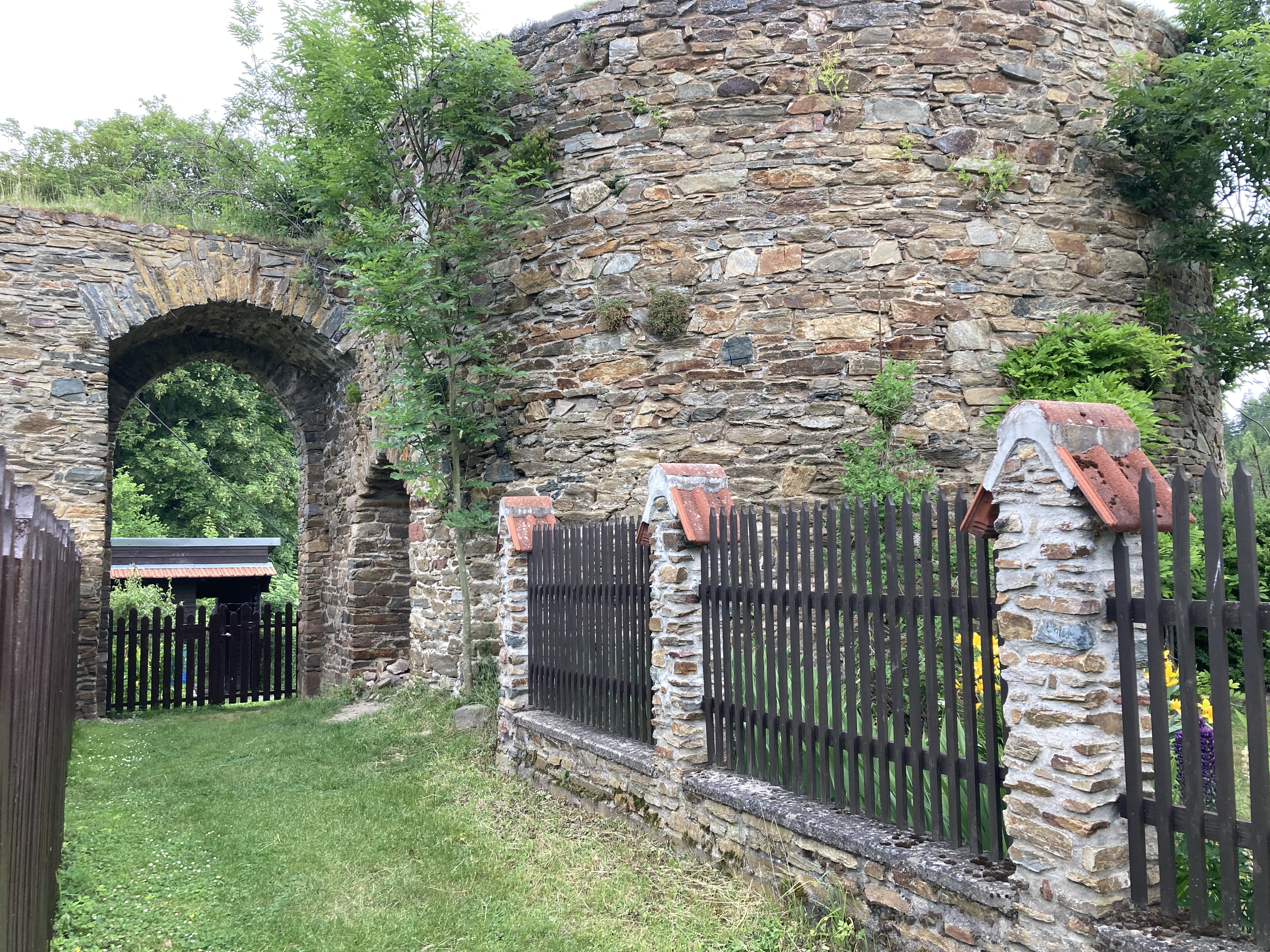
The map itself was modeled after a real geographical area around the town of Rataje nad Sázavou in what is now the Central Bohemian Region. Every settlement had a documented basis. The castle of Talmberg, for example, corresponds to a real structure whose medieval-era architectural records were used in reconstruction.
Release, Reception, and Commercial Performance
Kingdom Come: Deliverance launched on February 13, 2018, for PC, PlayStation 4, and Xbox One. Its reception was polarized at launch. Some critics praised the depth of its systems and the distinctiveness of its world-building. Others flagged technical issues — the game shipped with notable bugs that affected quest completion and performance, particularly on consoles.
Despite the mixed reviews, sales were strong. The game sold over three million copies in its first year, and lifetime sales exceeded five million by 2022. A Nintendo Switch port followed in 2024. An enhanced edition, Kingdom Come: Deliverance Royal Edition, bundled all DLC and performed well in subsequent sales windows.
Acquisition and the Sequel
In 2022, Warhorse Studios was acquired by THQ Nordic, a label under the Embracer Group. The acquisition was broadly seen as giving the studio the financial resources to proceed with a sequel at greater scale than would have been feasible independently.
Kingdom Come: Deliverance II was released in February 2025. The game continued the story of Henry directly, with a significantly larger map and expanded combat mechanics. It retained the historical constraint — no anachronisms, no fantasy elements — and the same underlying philosophy about player agency in a world that does not bend to the protagonist's importance.
Position in Czech Game Development
Warhorse's success helped shift international perception of the Czech Republic as a game-development territory. Prior to Kingdom Come: Deliverance, Bohemia Interactive was the primary reference point for Czech studios in mainstream gaming circles. Warhorse provided a second data point — one that showed Czech developers were not limited to a single genre or technical approach.
The studio remains headquartered in Prague, employing several hundred staff across development, QA, and publishing functions. It represents one of the cleaner examples in the region of a studio built on a specific design commitment rather than a broad commercial mandate.
For further reference on the broader Czech gaming landscape, see the Czech Gaming Market overview and the Bohemia Interactive profile.
Last updated: April 16, 2026 — Sources include Wikipedia: Warhorse Studios and IGDB.

